Biogas from municipal sludge: size the digester before the business case
Sludge-to-energy proposals fail at the same three numbers: volatile solids, destruction rate, and what the gas displaces. Get those right and the rest is procurement.
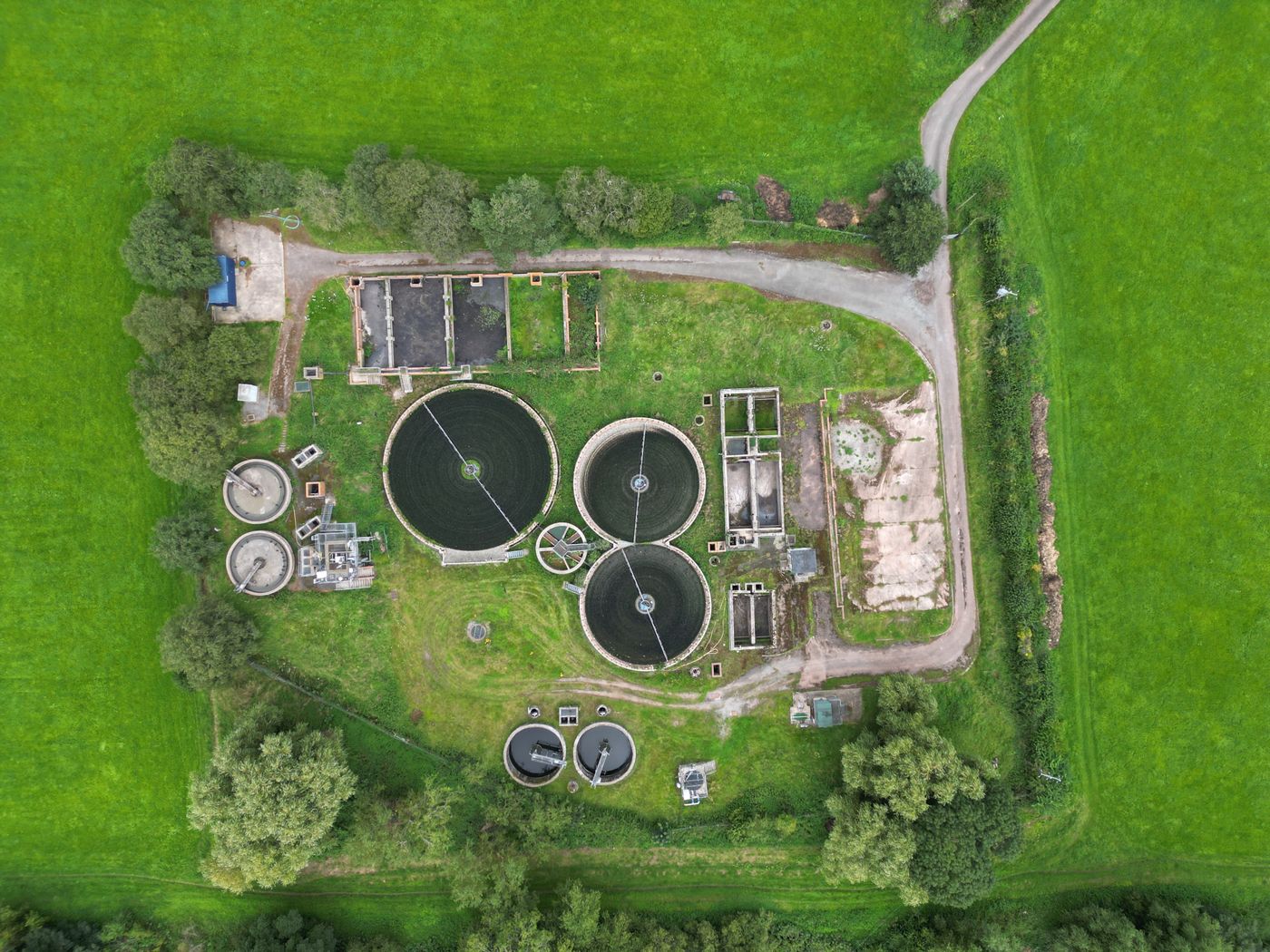
Anaerobic digestion is the rare renewable that a wastewater utility already owns the fuel for. It is also the technology most flattered by feasibility studies, because three multiplied assumptions — solids yield, volatile fraction, destruction rate — compound into a gas figure nobody is later accountable for. This piece sets out the sizing discipline before any spreadsheet is allowed to run.
Three numbers, measured
Start from sludge production measured at the works, not per-capita textbook values: raw primary plus waste activated, in kg dry solids per day, from at least a year of records to catch seasonality. Then the volatile fraction — typically 70–80 per cent for fresh municipal sludge, lower where the network is long and hot, as Gulf sewers are, because digestion has already begun in the pipe. Then destruction: a well-mixed mesophilic digester at 15–20 days’ retention destroys 40–55 per cent of volatile solids. Everything else follows.
| Parameter | Range | Note |
|---|---|---|
| VS loading | 1.6–2.4 kg VS/m³·d | Sets digester volume |
| Retention | 15–20 d | Mesophilic, 35–38 °C |
| VS destruction | 40–55 % | Mixing quality dominates |
| Specific yield | 0.8–1.1 m³ biogas/kg VS destroyed | 60–65 % CH₄ |
| CHP electrical | 36–40 % | Engine, at rated load |
A worked example keeps the orders of magnitude honest. A 200,000 p.e. works producing 12 t DS/day at 75 per cent volatile, destroying 48 per cent, yields roughly 4,300 m³ of biogas a day — call it 1.1 MW of continuous fuel energy, or about 420 kW electrical through an engine. Useful; not transformational. Proposals promising the works’ full power demand from digestion alone have usually multiplied optimism three times.
Gulf particulars
Heat, for once, is on the project’s side. Sewage arrives at 28–32 °C, so the digester heating duty that dominates northern European energy balances nearly vanishes; jacket water from the CHP covers it with margin to spare. Against that, two regional realities: sulphide is high in warm septic networks, so gas cleaning to protect engines is not optional; and sludge disposal routes are constrained, which often makes the volume reduction from digestion worth more than the energy.
What the gas is worth
- Displacing site electricity at utility tariff: the base case, and in subsidised-tariff markets sometimes a weak one — state the tariff assumption on page one.
- Displacing flared gas and imported diesel for sludge drying: often worth more than power generation.
- Volume reduction and pathogen kill: a disposal saving that survives any energy price, and in my experience the number that actually carries Gulf business cases.
- Upgrading to biomethane: only with a committed offtaker; a works-scale plant rarely justifies the cleanup train on its own.
Sized this way, digestion is a sound mid-size energy project with a disposal dividend. Sized from textbook per-capita values, it is a claim waiting to happen — which is where this series and my other line of work meet.
- Metcalf & Eddy / AECOM, Wastewater Engineering: Treatment and Resource Recovery, 5th ed. — solids and digestion chapters.
- Appels, L. et al., Principles and potential of the anaerobic digestion of waste-activated sludge. Progress in Energy and Combustion Science 34.
- Author’s digestion screening studies and plant reviews, 2010–2026.
Kassem, M. S. (2026). ‘Biogas from municipal sludge: size the digester before the business case’. Energy at the works, part 2. dr-kassem.com/writing/biogas-municipal-sludge. Accessed 2 Nov 2026.